

Listening Is Only the First Step
Communities build trust when feedback leads to visible decisions, improvements, and follow-through.

It’s common for community leaders to gather feedback using surveys, polls, or listening sessions after an event.
These are useful tools, but they’re only the first step.
The real test is what happens after the data comes in.
If people keep sharing ideas and never see a response or change, they may start feeling like they’re shouting into a void.
Eventually, they stop talking.
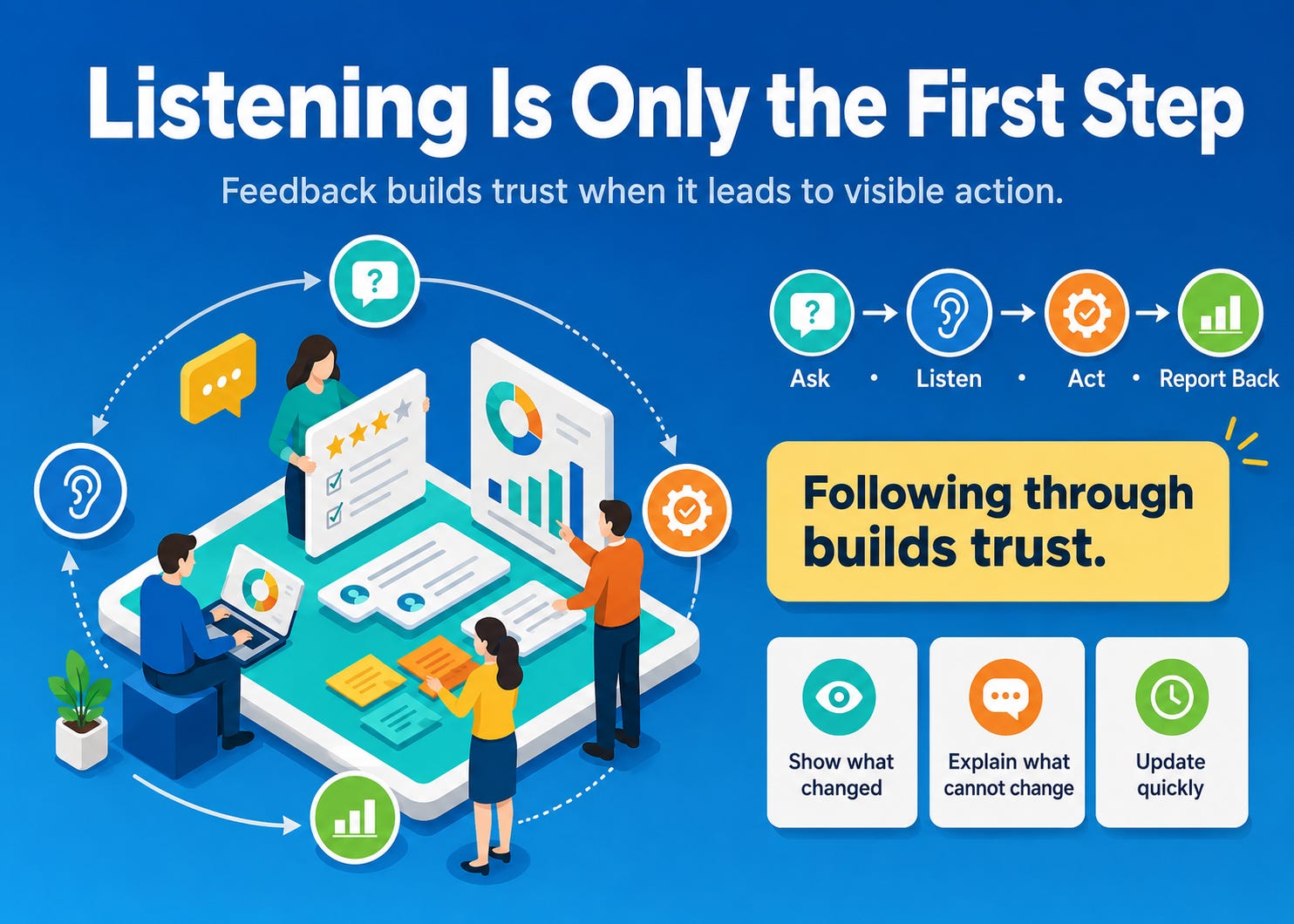
A healthy feedback loop has four parts:
Ask. Listen. Act. Report back.
Most groups handle the asking and listening stages well, but they often stop there.
They review the results behind closed doors, so members never learn what was discovered, which ideas will be used, why some suggestions were declined, or when changes might happen.
Closing the loop means showing members that their voices mattered.
This might involve sharing general survey trends, setting a timeline for improvements, or being honest about what is not currently possible.
Transparency matters, even when the answer is no.
You cannot implement every suggestion.
Some ideas may not fit the budget or mission, while others may negatively affect the experience of other members.
But a clear explanation shows that the feedback was genuinely considered.
Timing matters too.
A quick update after collecting feedback helps maintain engagement.
For example:
“We received 84 responses. The strongest themes were smaller discussions, clearer event information, and more opportunities to connect. We are reviewing these areas and will share the first changes next week.”
You do not need to address every response immediately.
You simply need to show that the process is moving forward.
It also helps to connect specific changes directly to member feedback:
We shortened the monthly meeting because you asked for it.
We added facilitated introductions because participants wanted more networking.
We created a resource library after hearing that files were difficult to find.
When people see these specific updates, they stop feeling like passive attendees.
They begin to see themselves as partners in the community.
The strongest feedback systems are not one-time activities.
They are ongoing.
This may include pulse questions, informal conversations, post-event reflections, or a small advisory group.
The goal is not to collect more data.
It is to make better decisions with the people you are trying to serve.
Listening sets an expectation.
Following through builds trust.
When was the last time you showed your members how their feedback influenced a decision?
Join the SixSides Skool community to explore practical ways to create stronger feedback loops for your events and communities.